-
Outpatient Strategies to Improve Childhood Immunization Rates:
Guiding Vaccine Hesitant Parents (VHPs)Vaccinations are among the most cost effective and safest measures to have been adopted by the public health system. However, concerns arise as an increasing number of parents become hesitant to vaccinate their children, making the children vulnerable to diseases. Improving immunization rates has been a rising topic in the face of increasing anti-vaccine literature. There has been a need to implement outpatient strategies which can be referred to when encountering vaccine-hesitant parents to improve childhood immunization rates.
Undertaking a literature review of studies that have sought to address the situation provides an avenue of identifying the interventions that can be adopted. Several evidence-based measures have been suggested to help improve vaccination rates.
In order to help family physicians create more positive experiences and improve vaccination rates within their community and practice, an educational tool has been developed in the form of this website to provide various evidence-based strategies, helpful handouts, and educational websites that can improve vaccine adherence.
-
Understand and Address Reasons for Refusal
To be able to approach the vaccine-hesitant parents more effectively, it is crucial that the health care workers first appreciate the reason behind the development of parents' ambivalence towards immunization. The impact of anti-vaccine messages, social media, internet, and stories within the community.
-
Educate and Discredit Myths
Discredit myths surrounding childhood immunizations. Provide information at prenatal visits. Discuss the importance of herd immunity. Provide immunization schedules and educational handouts/resources.
-
Communicate Effectively
It is crucial that an honest and direct line of communication is established. Frame messages clearly and with examples ie herd immunity. Do not provide mixed messages.
-
Promote the Vaccine
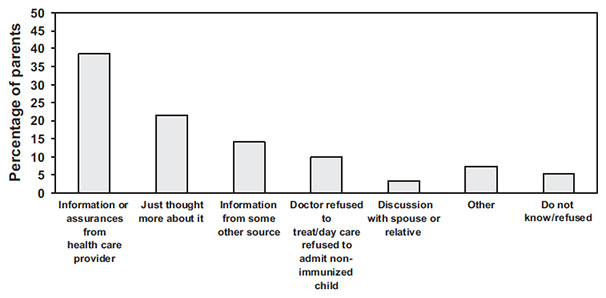
Parents having questions relating to immunization safety have been observed to trust their family physicians' opinions the most when considering immunization. Foster open, and clear communication. Use persuasion tools.
-
More Availability and Accessibility for Appointments
Physical barriers leading to delayed or missed vaccinations are aspects such as inconvenient clinic hours for working parents, or long waits at the clinic. Providers need to determine the needs of their specific community and take steps, such as extending clinic hours.
-
Use Reminder and Recall systems
The use of reminder and recall systems for both parents and offices can help to reduce missed opportunities where issues surrounding vaccination adherence can be addressed. They can be as simple as a clip or stamp or can be in the form of phone calls, mailed letters, electronic reminders or manual searches.
-
Address and Manage Pain
The influence of a child's pain, crying or anxiety on parents unwillingness to immunize their children on time should not be overlooked. Review the 4 P's to address and manage pain.
-
Refrain dismissal from your practice
Dismissing a child or family from your practice raises several ethical, legal and public health considerations. Although not preferred or recommended, it can be done if the patient is provided with a reasonable notice of dismissal or has been transferred successfully to another care provider.
-
Refusal to Vaccinate Forms
Exemption requests can be required to be signed by both parents. While agreeing that even tough measures may not succeed in changing the stance of the very hesitant parents, they would effectively eliminate numerous exemptions that are mainly sought based on convenience rather than religious and personal conviction.